
Earlobe Surgery
In Sydney, New South Wales
Featured In





Earlobe Repair in Sydney
Oversized earrings or piercings may stretch, damage, or tear the ear lobe past the point of natural recovery.
The popular fashion trend of gauges, earplugs, and tunnels can permanently stretch the ear lobe. Or, if you wear heavy earrings long-term, the skin can get stretched as well. Stretched or torn earlobes may also be caused by a traumatic event such as earrings getting caught in clothing or small children pulling on the ear and causing injury.
A stretched or torn earlobe will not usually close by itself, but it can often be repaired surgically. Dr Rizk performs earlobe repair and reconstruction in Sydney.
What is earlobe surgery?
At Rizk Plastic Surgery in Sydney earlobe surgery or earlobe repair is a cosmetic procedure to repair a torn or stretched earlobe.
It may be suitable for those who have stretched out their skin and want to undo the effect, or for people who have experienced trauma or injury to the lobe area. There are a few options for how to repair stretched earlobes, and which one may be right for you all depends on the extent of the deformation.
For larger holes, however, there is usually excess skin and tissue that needs to be removed before the earlobe can be sewn back together. No matter the method that works best for you, the goal of any earlobe repair or reconstruction surgery is to create a natural-looking shape that compliments your face.

Benefits of earlobe repair surgery
If you have had gauges in the past and are ready to remove them or you've experienced an accidental tear of your earlobe, earlobe reconstruction surgery may be suitable for you. The aim is to close the tear or stretched hole and improve the shape of the earlobe. Where only one ear is affected, repair can improve symmetry between the ears, although the two ears may not match exactly. If you have stretched or damaged earlobes for reasons like any of the following, earlobe repair surgery may be able to help you:
- •Sudden, accidental tears
- •Large piercings or gauges
- •Prolonged wear of heavy earrings
Results vary between individuals.
Am I a candidate for earlobe repair and reconstruction?
In general, good candidates for earlobe repair and reconstruction are men and women who have one of the above-listed concerns but otherwise are in good health. They don't have any major health issues like diabetes or heart disease, and they are free of any infections — especially ear infections — that can complicate their procedure.
Like in all of his cases, Dr Rizk advocates the National Law and Australian Health Practitioner Regulation Agency (AHPRA) guidelines that any surgical or invasive procedure carries risks. Before proceeding, you should seek a second opinion from an appropriately qualified health practitioner.
Regardless of the reason for or extent of the deformity of your earlobe, Dr Rizk will work with you to craft a personalised earlobe reconstruction plan. He'll make sure to answer any questions and address any concerns you may have throughout the process.
Earlobe repair and reconstruction procedure
Because every person's hopes for their surgery are different, the exact procedure you undergo will be tailored especially for you. The size and shape of the gap to be repaired and your skin's elasticity will be major factors that determine the process Dr Rizk recommends, along with your age, weight, and overall health.
Earlobe repair is usually a day procedure under local anaesthetic, performed in an appropriately accredited facility, and you can go home on the day of your surgery. He may use an instrument to remove the top layer of skin around the inside of the hole and then use sutures to hold the gap closed as it heals.
For more major repairs like when large gauges have been used to stretch the ear, Dr Rizk will begin by applying the appropriate anesthetic (topical or regional). He will then remove the stretched skin and tissue and reshape the earlobe. Once the hole is closed, Dr Rizk will use sutures or a skin adhesive to secure the skin together and dress and bandage the site.

Your recovery from earlobe repair and reconstruction
Recovery from earlobe surgery varies between patients. Over the first week, you can expect to have significant swelling and tenderness, but this should be fairly manageable with the medication and care Dr Rizk will recommend. He will give you instructions on how to keep the wound and stitches clean so it's important that you follow them closely.
Dr Rizk will schedule any follow-up appointments to remove the stitches if necessary and to check on your progress. Recovery time varies for each patient, depending on your skin's resilience and your overall health. Your diligence in following the aftercare instructions and ensuring that your repaired earlobe is protected will help support your recovery. Avoid wearing earrings in the repaired earlobe until Dr Rizk advises it is appropriate.
Double Bay, Sydney
Book a consultation with Dr Rizk
Every patient receives a personalised treatment plan tailored to their goals. Consultations are available in person at Double Bay or virtually. Cosmetic surgery requires a GP referral, at least two consultations with Dr Rizk (at least one in person) and a cooling-off period of at least seven days before surgery is booked.
Risks and possible complications
All surgery carries risks. Dr Rizk will discuss the risks that apply to you at your consultation.
Possible risks of earlobe repair include:
- •Bleeding
- •Infection
- •Wound-healing problems, including separation of the wound
- •Visible scarring, including a small notch at the edge of the earlobe
- •Thickened, raised (hypertrophic) or keloid scars
- •Asymmetry between the earlobes
- •Changes in sensation of the earlobe
- •Reactions to local anaesthetic
- •The earlobe stretching or tearing again
- •Need for revision surgery
Results vary between individuals and further surgery may sometimes be needed.
Your earlobe repair and reconstruction results
After any swelling and bruising have gone away and the scar has faded, the final result becomes clearer. Results vary between individuals.
Continuing to care for your ears and their skin will help protect the repair. If you do want to get your ears pierced again, you should wait several months at a minimum — Dr Rizk will give you more specific and customized guidance on this after your operation. A repaired earlobe can stretch or tear again, particularly if heavy earrings are worn.
Learn more about earlobe repair and reconstruction surgery in Sydney in a consultation with Dr Joseph Rizk
To find out if earlobe repair is suitable for you, contact Dr Rizk's rooms. He and his team in Sydney will talk you through your options, including the risks and recovery. To schedule your appointment, you can fill in the consultation form on this page or call us on 1300 707 007, Monday – Friday, 9.00 am – 5.00 pm.




Request a consultation
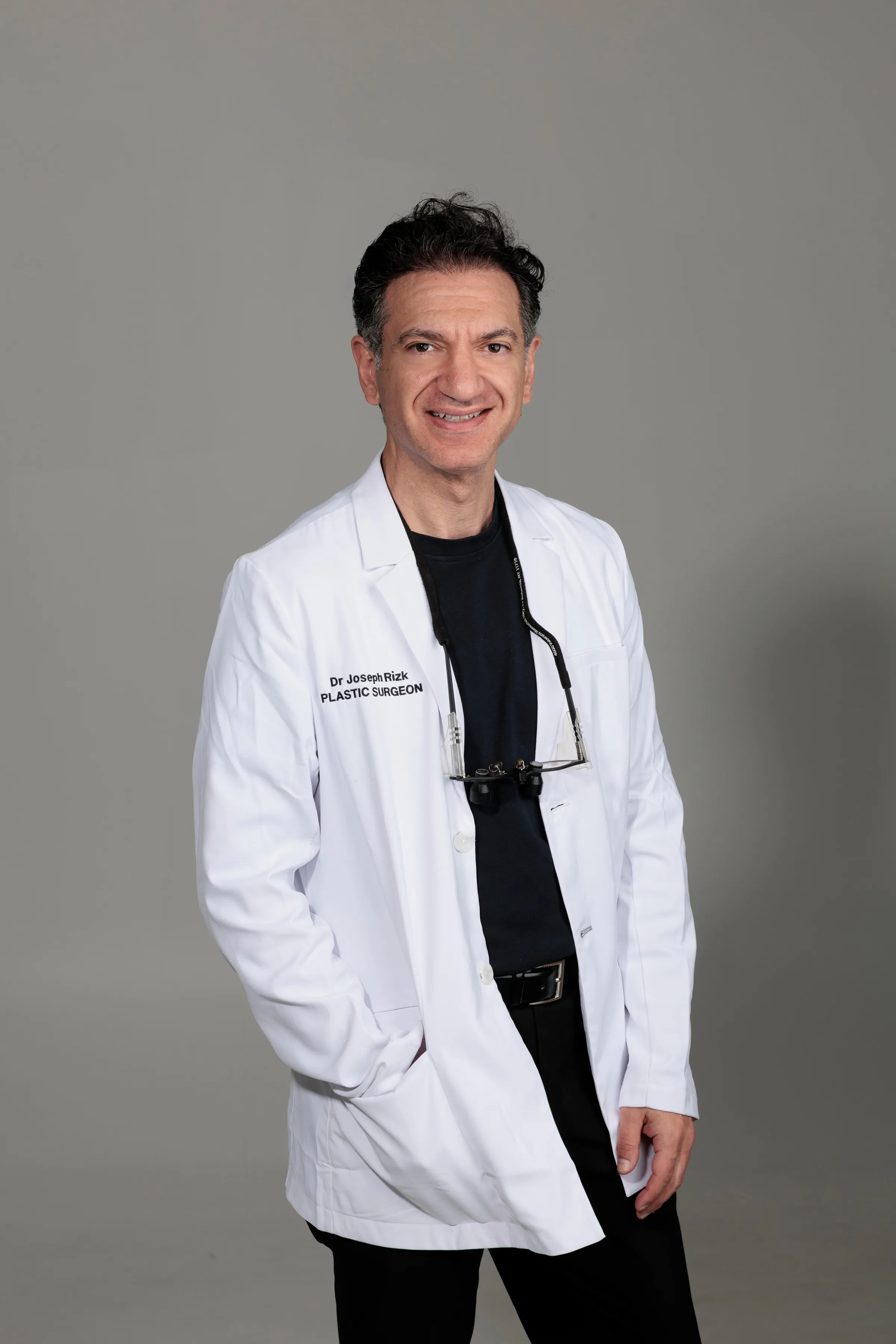
Dr Joseph Rizk (MED0001186612) aims to make sure that each patient is heard, respected, and treated well. His approach is to give you the accurate medical information you need to make informed decisions about your course of treatment, including its risks and recovery.
Double Bay
Suite 301, Level 3
451 New South Head Road
Double Bay NSW 2028

Choose your own consultation time online.
Book a Consultation OnlineCosmetic surgery requires a GP referral, at least two consultations with Dr Rizk (at least one in person) and a cooling-off period of at least seven days before surgery is booked.
Want someone to contact you?
Leave your details below and we'll be in touch within 24–48 hours.